Culture· Gjirokastër
Antigonea Archaeological Site
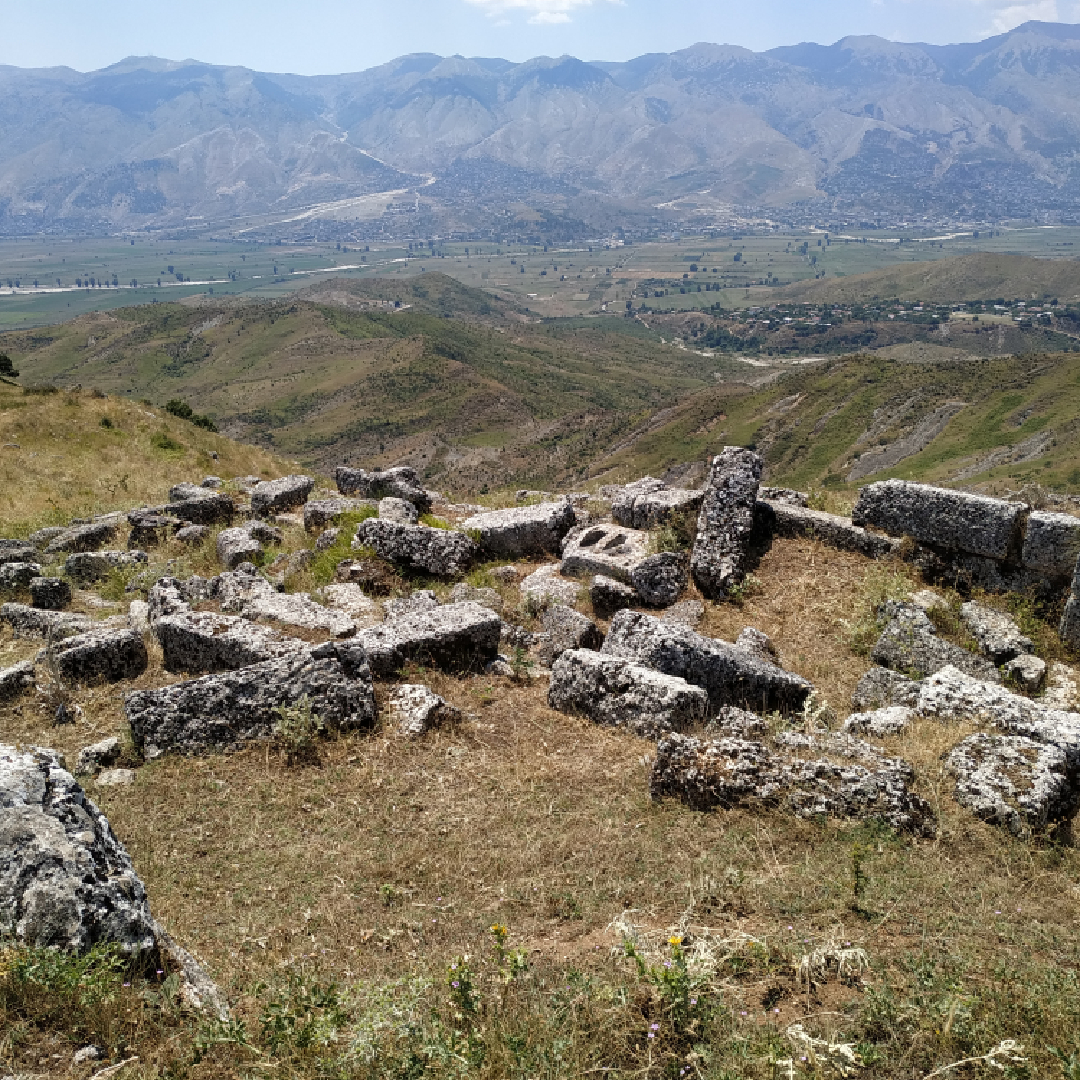
Antigonea is one of the most important ancient cities in southern Albania, situated on Jerma Hill, at an altitude of approximately 600–700 metres above sea level, overlooking the Drinos Valley.
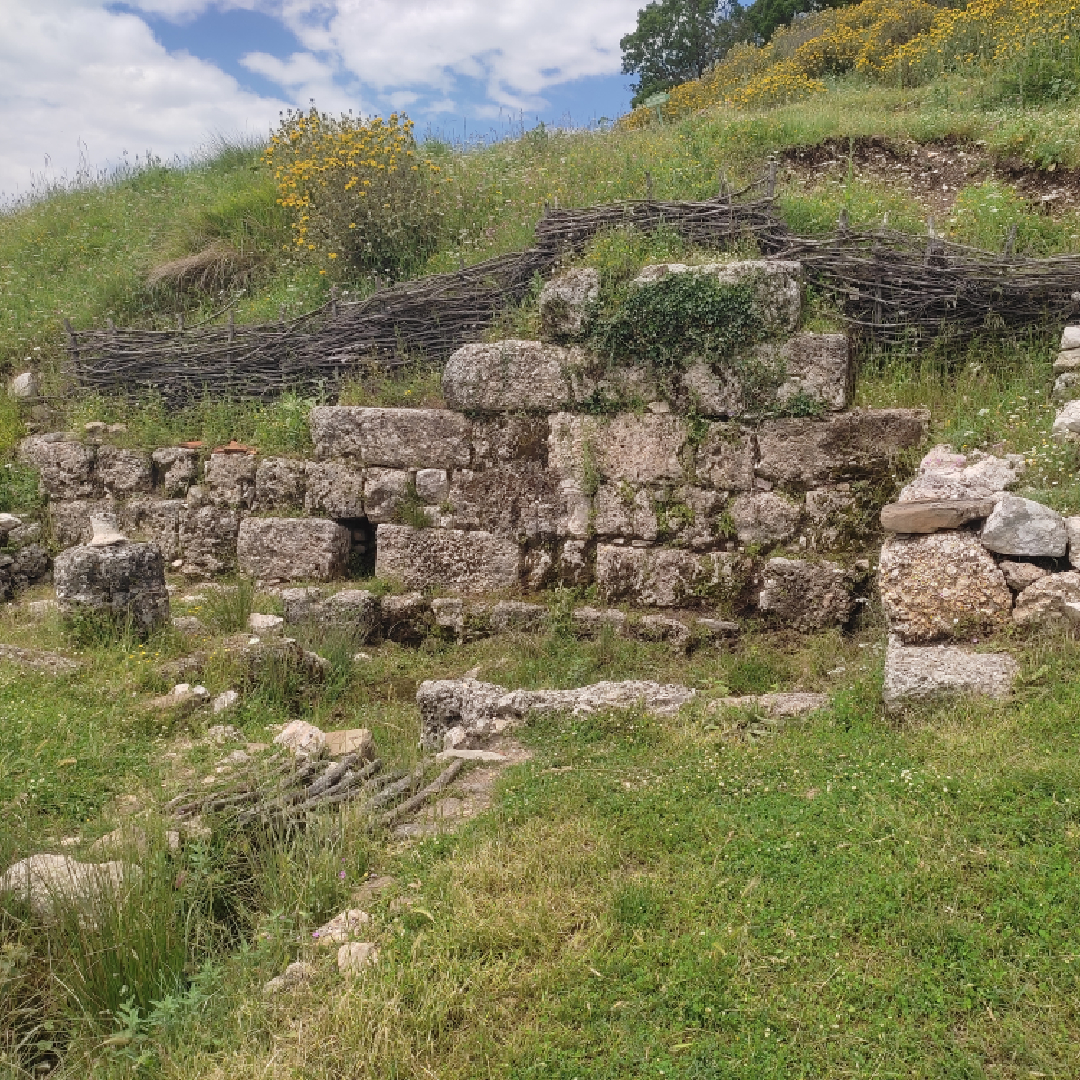
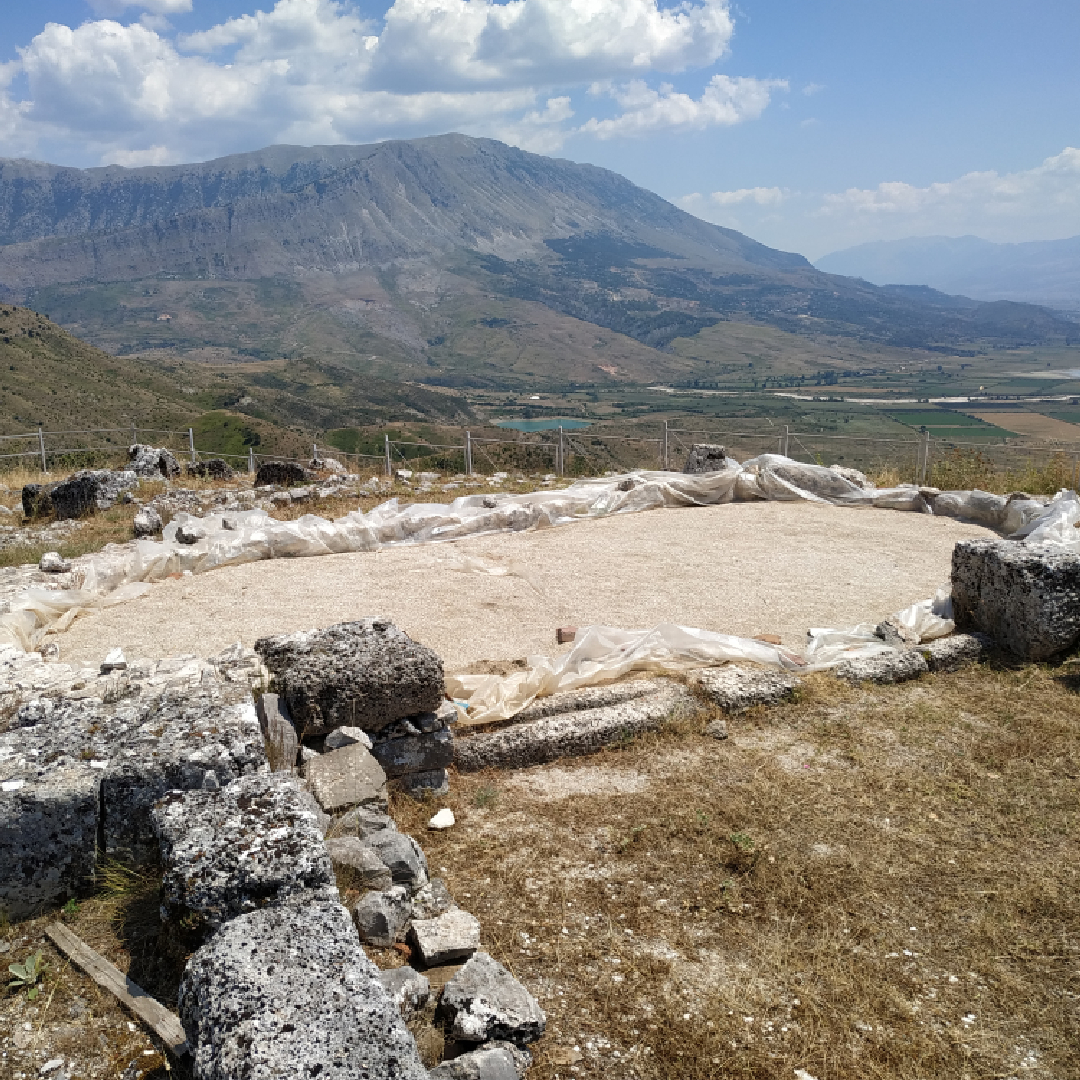
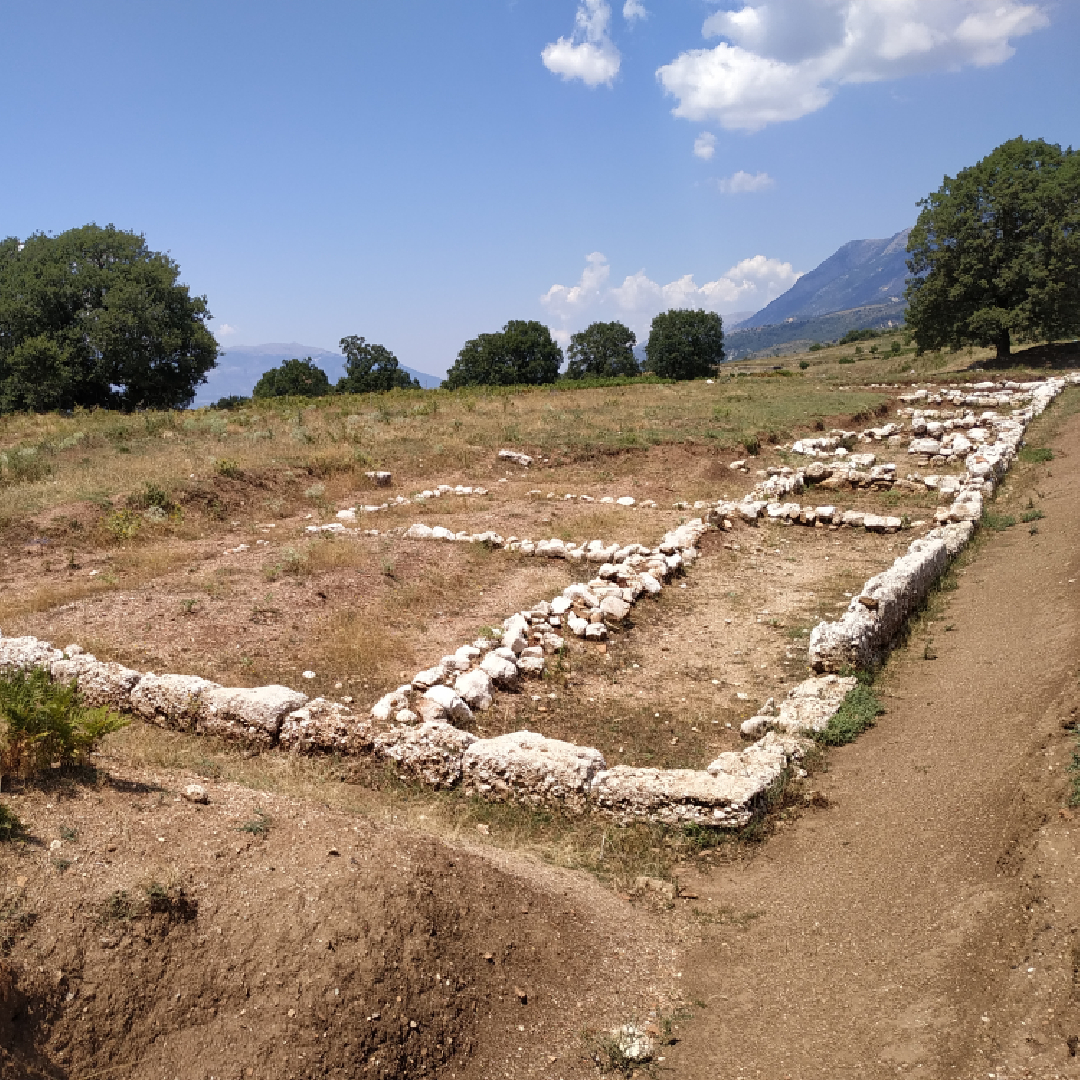
Antigonea is one of the most important ancient cities in southern Albania, situated on Jerma Hill, at an altitude of approximately 600–700 metres above sea level, overlooking the Drinos Valley. Its history is closely connected to Pyrrhus, King of Epirus, who founded the city in honour of his first wife, Antigone, the daughter of Berenice and stepdaughter of Ptolemy, King of Egypt. The city was established during the Early Hellenistic Period, around 319–272 BC, and, according to historical tradition, was named after her as a special gift of love. The city covered an area of approximately 60 hectares, including the territory inside and outside its defensive walls, while the Archaeological Park of Antigonea extends over approximately 90 hectares. It was designed according to the Hippodamian urban plan, with straight streets, regularly arranged residential quarters and an organised layout resembling a chessboard. Its defensive system consisted of strong limestone walls, defensive towers and three main fortified gates. At the highest point stood the Acropolis, which served both as a strategic defensive position and as a religious centre.
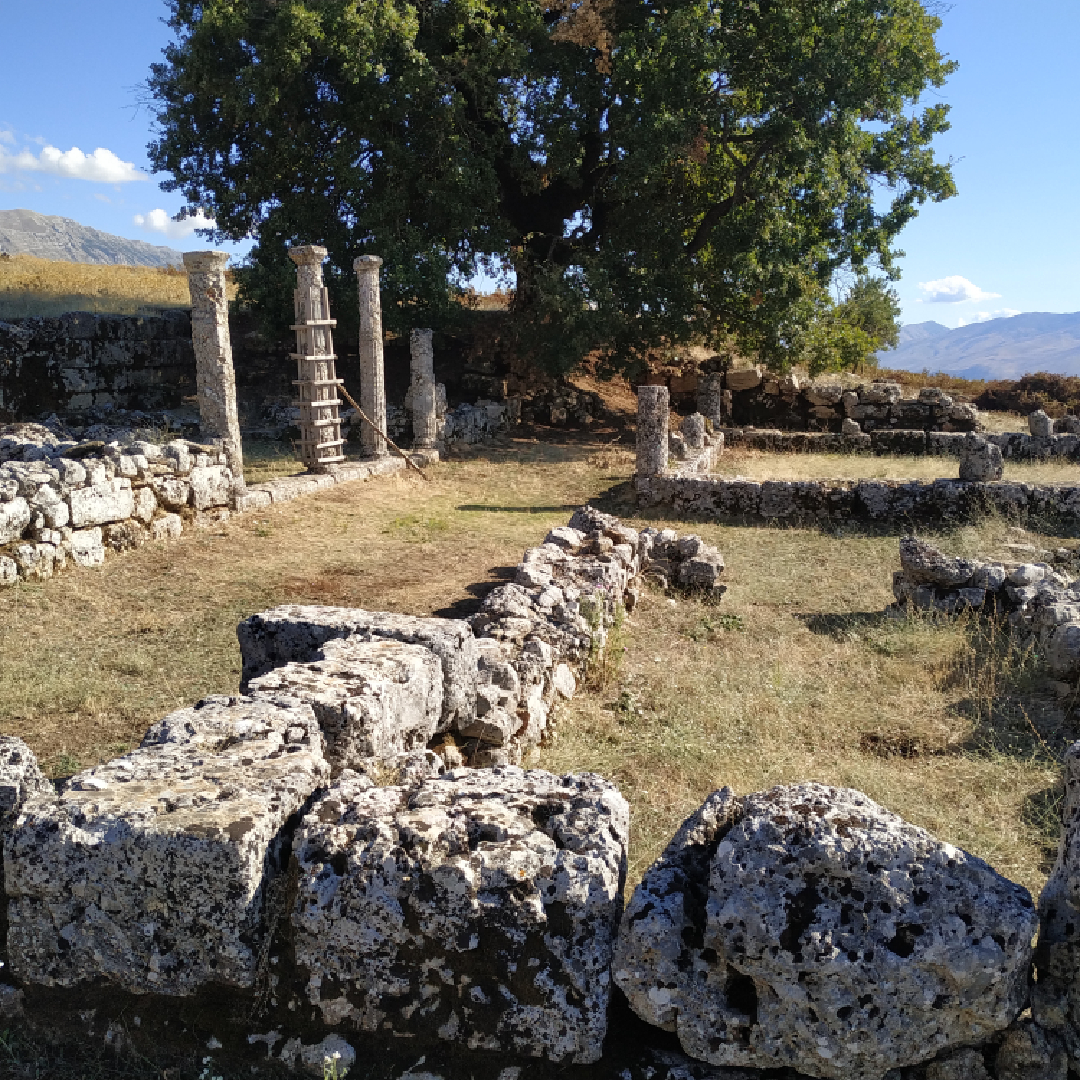
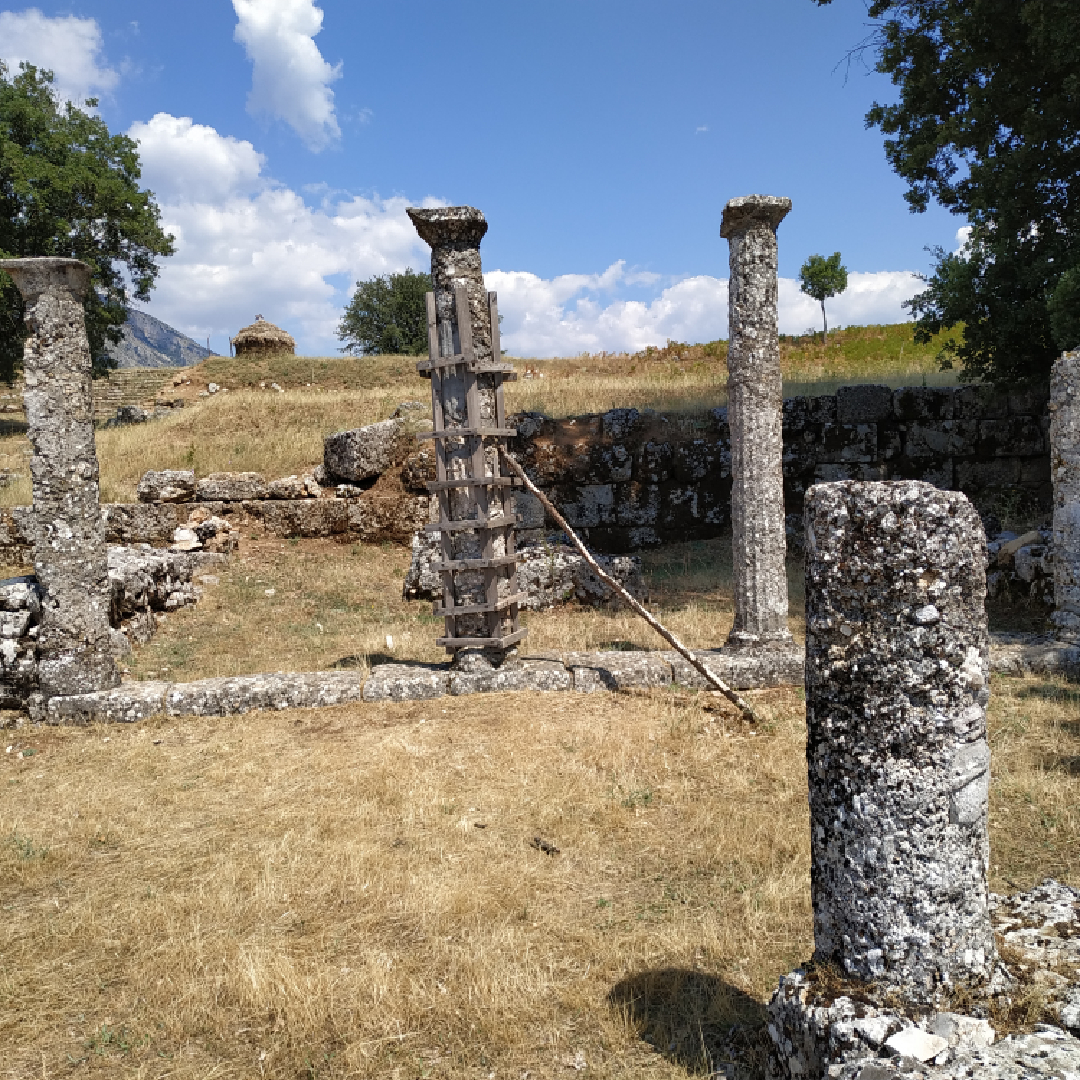
Antigonea was an important economic, commercial and craft centre, as well as a strategic point for controlling the Drinos Valley. Archaeological excavations have revealed craftsmen's quarters, houses with internal courtyards (peristyles), the Agora, which served as the city's main square and marketplace, and the Stoa, a public building measuring approximately 59 metres long and 9 metres wide. Among the most remarkable archaeological discoveries are agricultural and craft tools, bronze vessels decorated with mythological figures, bronze figurines, numerous coins, including those bearing the name of Antigonea, and silver voting tokens bearing the city's emblem. The discovery of these tokens played an important role in confirming the exact location of the ancient city. Antigonea was destroyed in 168 BC by the Roman army during the campaign of the Roman consul Lucius Aemilius Paullus. The Romans also destroyed dozens of other cities in Epirus during this campaign. Antigonea was burned and plundered. Some inhabitants managed to escape, while many others were captured and sold into slavery. Thus, the city traditionally associated with love met its end through war and destruction.
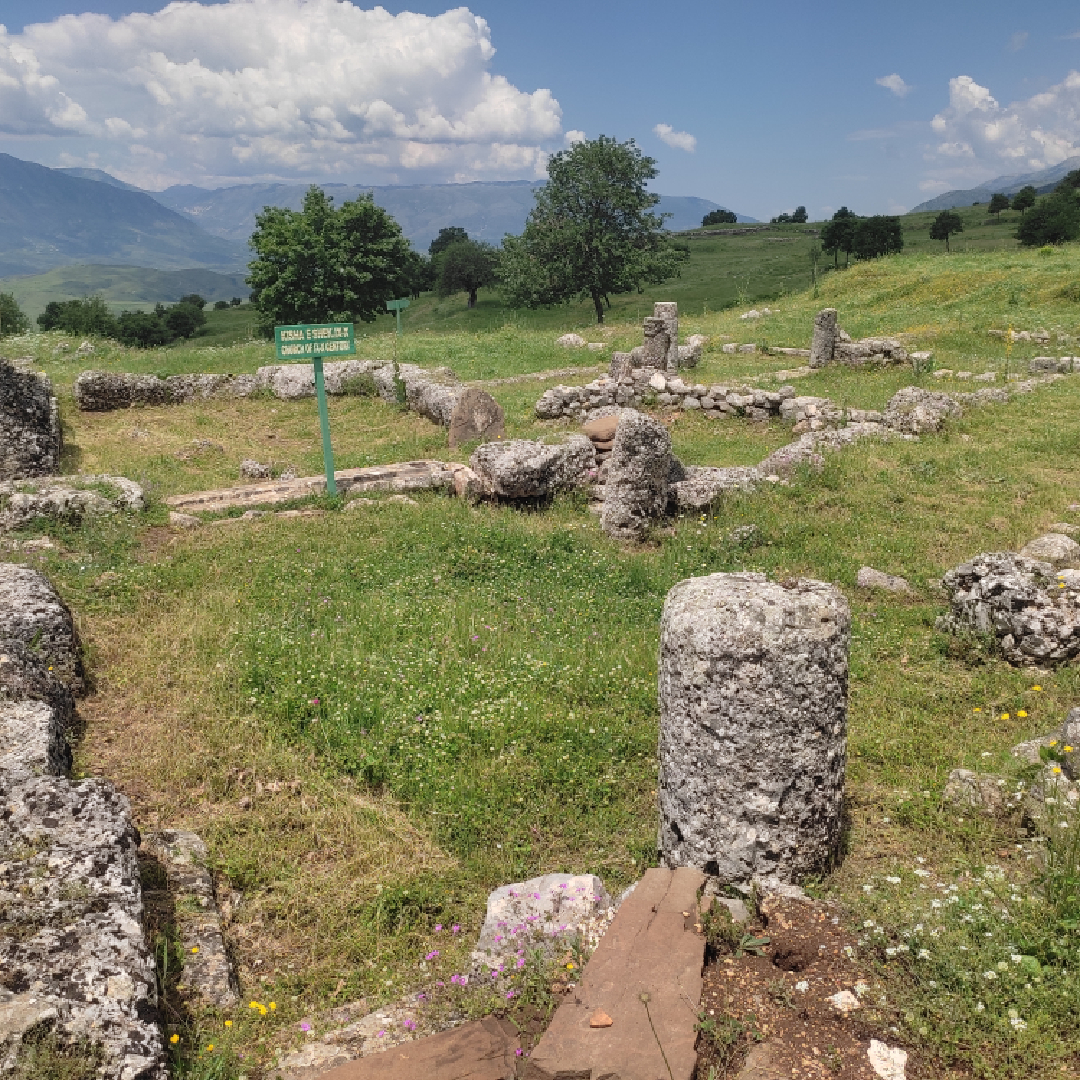
During later periods, Christianity also left its mark on the site, as evidenced by the remains of an Early Christian basilica dating from the 6th century AD, together with other religious structures and burial grounds. Among the religious remains is also the triconch church associated with the name of Kristofor Kokëqeni and the cult of Saint Christopher. Today, Antigonea represents an extraordinary historical and archaeological heritage. Although only a small part of its territory has been excavated and studied, the site continues to reveal the urban organisation, economic development, social life and history of an important Hellenistic civilisation.
Antigonea remains the symbol of a city built out of love and destroyed by hatred – a story that has survived through the centuries.
Photos